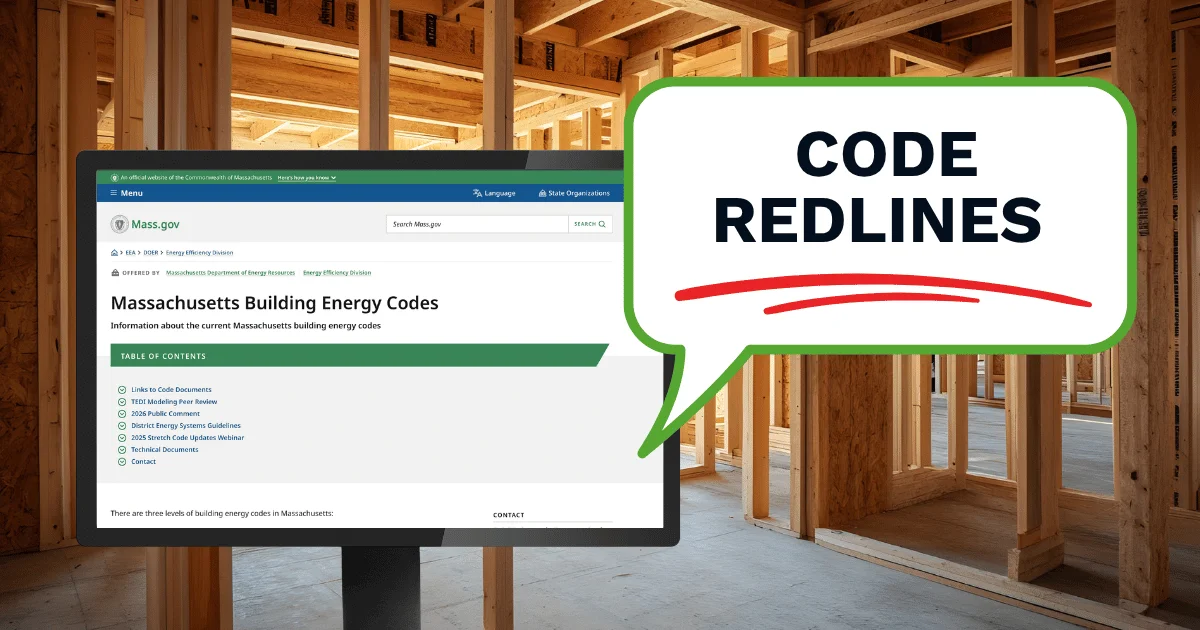
The Department of Energy Resources (DOER) has proposed a round of revisions to the Stretch and Specialized energy codes, and the people who enforce those codes have a direct stake in how the final language reads. The short version: DOER published redline and clean versions of proposed updates to both the residential and commercial provisions, held a public hearing on June 16, 2026, and closed the first written comment period on June 24. DOER has since presented residential and commercial stretch code updates to the Board of Building Regulations and Standards (BBRS), and additional opportunities for comment are expected as the updates move through the process. This post covers what the redlines change, how the promulgation process works from here, and how to have an enforcement-side comment ready when the next window opens.
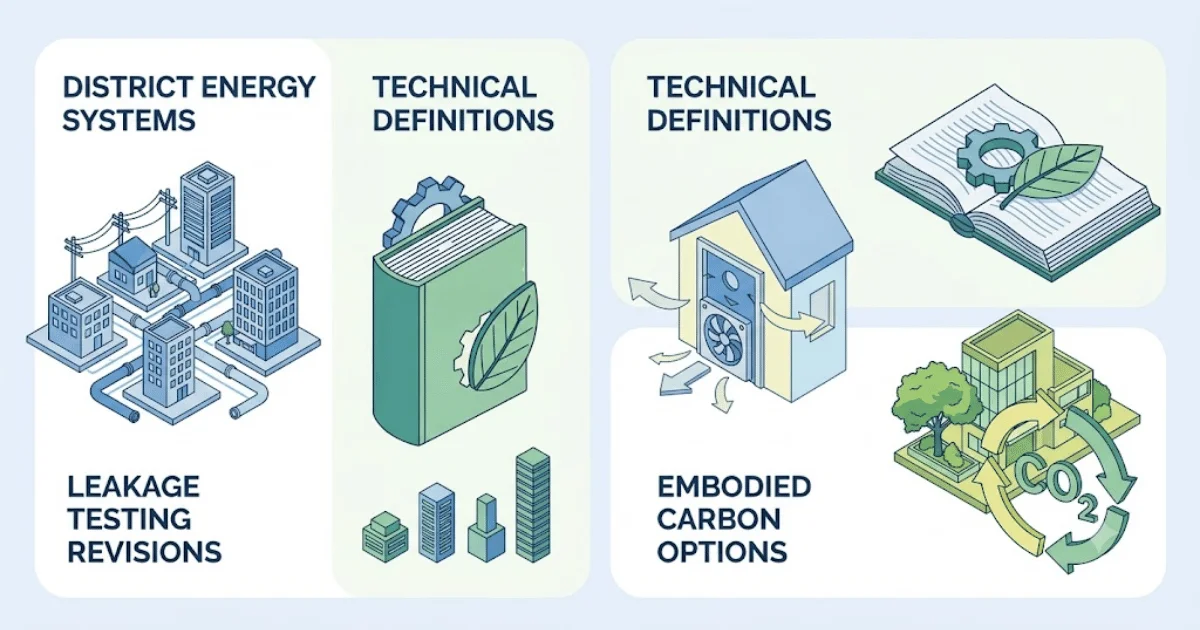
The revisions grew out of public comments DOER received on its Guidelines for District Energy Systems, and the package expanded from there. Based on the proposed updates DOER released, the changes include district energy provisions, technical definition updates, updated reference standards, revisions to leakage testing, embodied carbon options, added electrification flexibility, and technical corrections informed by stakeholder feedback gathered through 2025.
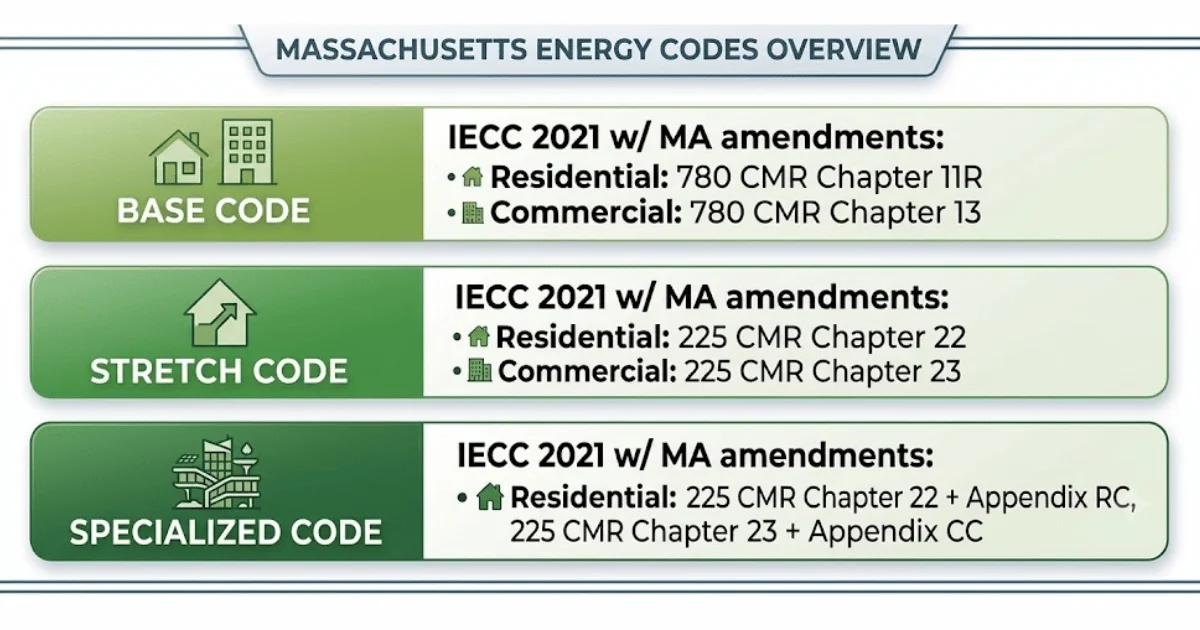
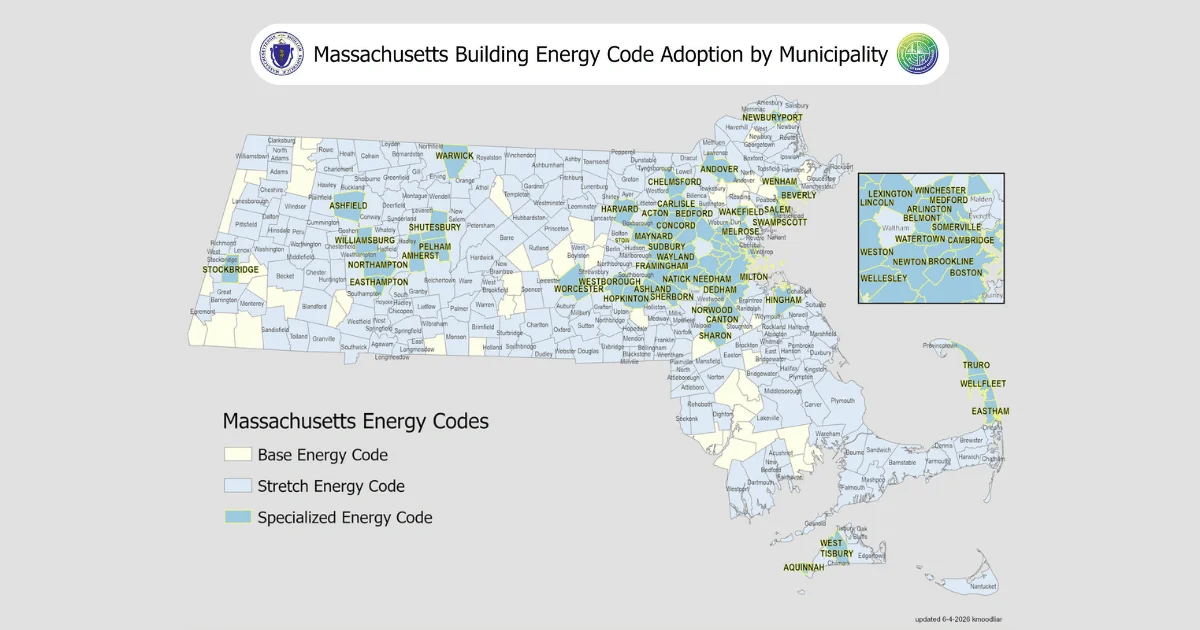
These are amendments to the Stretch Energy Code and the opt-in Specialized Code found in 225 CMR 22.00 (residential) and 225 CMR 23.00 (commercial and all other buildings), the codes already enforced in the vast majority of Massachusetts municipalities. DOER characterizes the round as modest, and the redline format makes that verifiable: the Massachusetts building energy codes hub links to redline versions that show exactly which language changes, along with clean versions and a summary of changes. For an inspector, the redlines are the document worth reading because they show precisely which requirements you enforce today would read differently tomorrow.
DOER opened the public comment period on the proposed revisions in late May, held a virtual public hearing on June 16, and accepted written comments through 5 PM on June 24, 2026. MBCIA alerted members while the window was open, and organizations across the design and construction industry, including AIA Massachusetts, tracked the proposals through their code committees.
If you missed that window, you did not miss your only chance. You did miss the easiest one, which is the argument for being ready before the next window opens rather than waiting until after.
Energy code updates follow a defined path. DOER develops the Stretch and Specialized code language and reviews the comments it receives. Updates are presented to the Board of Building Regulations and Standards(BBRS), as DOER has already done for the residential and commercial Stretch code updates. The BBRS process includes its own notice and hearing requirements before any language takes effect. Monitoring the agendas of the BBRS 2026 meetings is the most reliable way to see updates coming, because proposals appear there before they reach the field.
A further public comment period on the commercial stretch code updates is expected. When it opens, the documents will be posted to the stretch energy code development page, the same place the June round’s redlines, clean versions, and summary of changes live now.
Most comments on energy code proposals come from designers, builders, and advocacy organizations. Far fewer come from the people who check the work, and that perspective is exactly what a code writer cannot supply from a desk: whether a requirement can be verified during inspection, what documentation actually arrives at the permit counter, and where current language produces inconsistent enforcement across communities.
If a proposed change affects how you would verify leakage testing, what a compliance report must show, or how a definition change ripples through plan review, it is comment material. Field experience submitted during the comment period shapes the final language. The same experience shared after promulgation is just a complaint.
Draft your comment against the current redlines now, while the documents are posted and the issues are fresh. When the next window opens, you can file rather than starting from a blank page under a deadline.
Three habits help a department avoid surprises: watch the stretch energy code development page where DOER posts proposals, watch BBRS meeting agendas, and watch MBCIA alerts, which exist precisely so members do not each have to monitor the state on their own. DOER also offers technical resources for the Stretch and Specialized code communities, including a peer review service for projects on the Thermal Energy Demand Intensity compliance pathway, as described on the energy codes hub.
Bring your reactions to the redlines to the next MBCIA meeting. A comment letter reflecting the shared experience of many enforcing officials carries more weight than any single department’s letter. The association can write only one if members surface what they are seeing.
This article is for general information. Confirm current comment deadlines and document versions on the Mass.gov pages linked above, as dates and drafts change as the process advances.
The information shared by the Massachusetts Building Commissioners & Inspectors Association (MBCIA) is intended to enhance knowledge of building safety within Massachusetts. Recommendations provided are for educational purposes only and do not constitute legal or professional advice. MBCIA holds no liability for actions taken based on this information. Always consult with relevant regulatory entities and professionals for specific advice or guidance.
Stay updated with the latest industry trends, building code updates, and news from MBCIA. Subscribe to our newsletter and be the first to know about essential insights and events.


